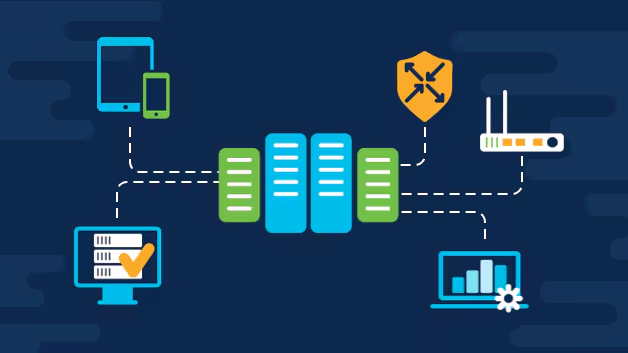
Learn how to use reverse IP lookup to discover which websites share the same server as your competitor. A practical case study for SEO and infrastructure analysis.
What is Reverse IP Lookup and How to Use It for Competitive Analysis
Understanding your competitor’s infrastructure can reveal valuable insights about their hosting strategy, SEO risks, and network footprint. One practical method is Reverse IP Lookup. In this case study, we’ll explain what reverse IP lookup is and how you can use it to discover which other websites are hosted on the same server as your competitor.
What Is Reverse IP Lookup?
Reverse IP lookup is a technique that allows you to find all domains associated with a single IP address. While a normal DNS lookup shows the IP of a domain, reverse IP does the opposite — it reveals what other websites are using the same server.
This is especially useful in shared hosting environments, where dozens or even hundreds of websites may operate on one IP address.
Case Study: Analyzing a Competitor’s Hosting Environment
Step 1 — Identify the Competitor’s IP Address
First, determine the IP address of your competitor’s domain using DNS tools. Once you have the IP, you can proceed with deeper infrastructure analysis.
Step 2 — Use Reverse IP Lookup Tool
Open the Reverse IP Lookup tool and enter the IP address. The tool will generate a list of domains hosted on the same server.
Step 3 — Analyze the Results
Now evaluate the returned domains carefully:
- Are they niche-related or completely unrelated?
- Do they look like spam or low-quality websites?
- Are multiple competitor projects hosted together?
- Is the IP shared with risky or blacklisted domains?
Why This Matters for Competitive Analysis
Reverse IP lookup provides strategic intelligence:
- Detect Private Blog Networks (PBNs): If many similar niche sites share the same IP, this may indicate a link network.
- Understand Hosting Strategy: Shared hosting vs VPS vs dedicated infrastructure.
- Identify Related Projects: Companies sometimes host multiple brands on one server.
- Assess SEO Risk: Sharing an IP with spam domains can negatively affect trust signals.
Practical Example
Imagine your competitor ranks highly in search results. After performing reverse IP lookup, you discover that 40+ niche blogs are hosted on the same server and interlink with each other. This may suggest a structured backlink strategy that you can further investigate.
When Reverse IP Lookup Is Most Useful
- Before launching an outreach campaign
- During backlink profile audits
- When investigating suspicious ranking spikes
- When evaluating hosting providers
Limitations to Consider
Modern cloud hosting and CDN services (like Cloudflare) may mask real server infrastructure. In such cases, reverse IP lookup may show CDN-level results instead of the origin server.
Conclusion
Reverse IP lookup is a powerful but often overlooked competitive intelligence method. By analyzing which domains share the same IP address, you can uncover hidden relationships, detect risky hosting environments, and better understand your competitor’s SEO infrastructure. Use the Reverse IP Lookup tool regularly as part of your technical SEO and infrastructure audits.